From HAL to Jarvis, part 6 of 7. A history of artificial intelligence, told as a story, for people who will use it. It began as a talk.
The facts and figures in this part are as of October 2026.
Die ich rief, die Geister, werd' ich nun nicht los.
The spirits I summoned, I cannot dismiss.Goethe, Der Zauberlehrling, 1797
Home versus office
Let me say the thing out loud, because everybody who works in a large company is thinking it.
At home, you have an assistant that reads your files, drafts, plans, runs for hours, on your own data, with your own history. You describe the outcome. It comes back with the work.
At the office, you have the same models behind a narrower door. Less of your data. Less of your history. Less permission to act. The frustration that produces is real, and it is nobody’s personal failure.
Here is what I think it is. The office is not slow. It is careful. And careful needs a written specification: of what the machine may see, what it may do, what it must bring back to a person. At home you can summon the spirit and see what happens. At the office, someone has to know the word that stops the broom.
Careful about what
Careful about what, exactly? Four things, and they are worth naming, because they are the same four in every company.
Bias. Caliban again. The machine learned the language, and the language carries every prejudice of the people who wrote it. It will reproduce them politely, in good grammar.
Confident error. It is fluent when it is right and fluent when it is wrong, and the reader cannot hear the difference.
Data that leaves the building. What you type into a machine goes to someone’s machine. Whose, where, and what they may keep is a contract question before it is a technology question.
And the signature. The machine signs nothing. When a decision goes out, a person answers for it, and that person has to have been in a position to check.
Europe has written a law around those questions, the AI Act. I will not read it to you. In one sentence, and roughly, for the uses it classes as high-risk, it asks for what this whole series has been asking for: know what the machine was given, know what it may do, and keep a human where the decision is.
There are other questions. Whose writing it learned from. How much electricity it burns. They are real, and they will not be settled here.
Careful is not fear. Careful is those four, answered in writing.
Three pictures
Where we are in October 2026, in three pictures. They happen to come from one company’s press material, so each gets a counterpoint, because this is a map and not a fan letter.
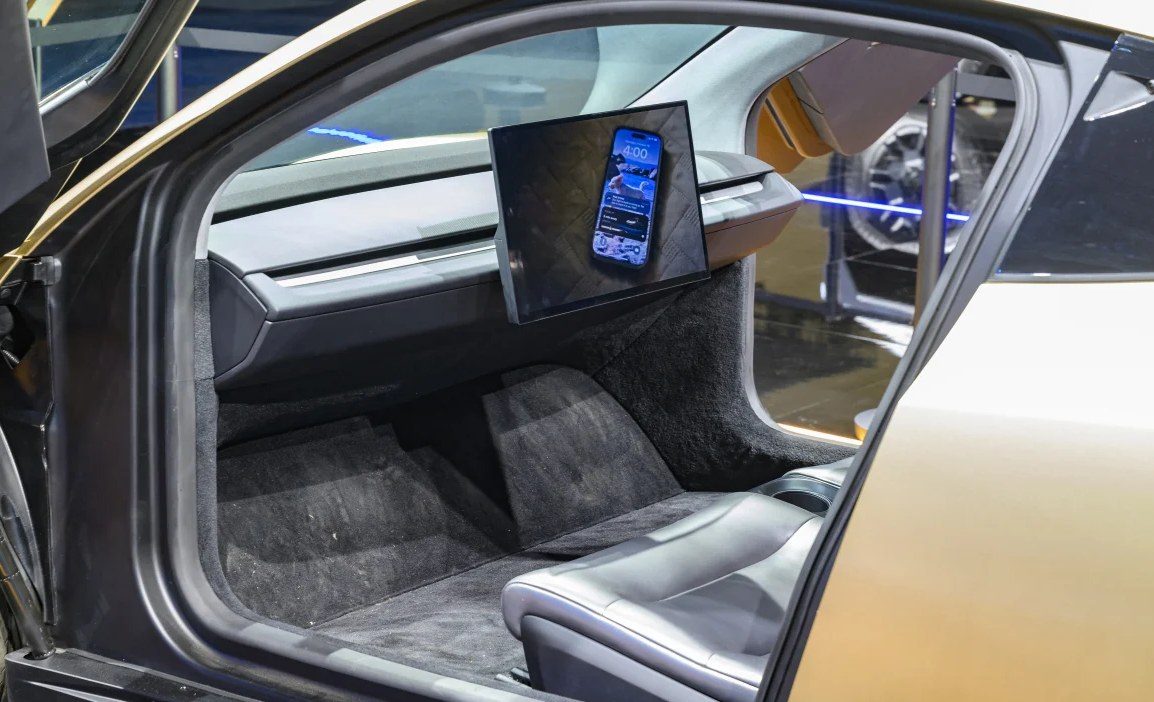
A car with no wheel and no pedals. Since the first week of September 2026, in Austin, members of the public have been riding in a Tesla Cybercab that has no steering wheel and no pedals. Inside it, two eras stacked: cameras feeding a vision network that drives, the dial machine pointed at a windscreen, and a language model you talk to. The driving is the vision networks; the language model is the interface. Meanwhile Waymo has been carrying paying passengers for years, in about a dozen American cities, at about half a million rides a week. Verne’s capsule, with the physics paid for.
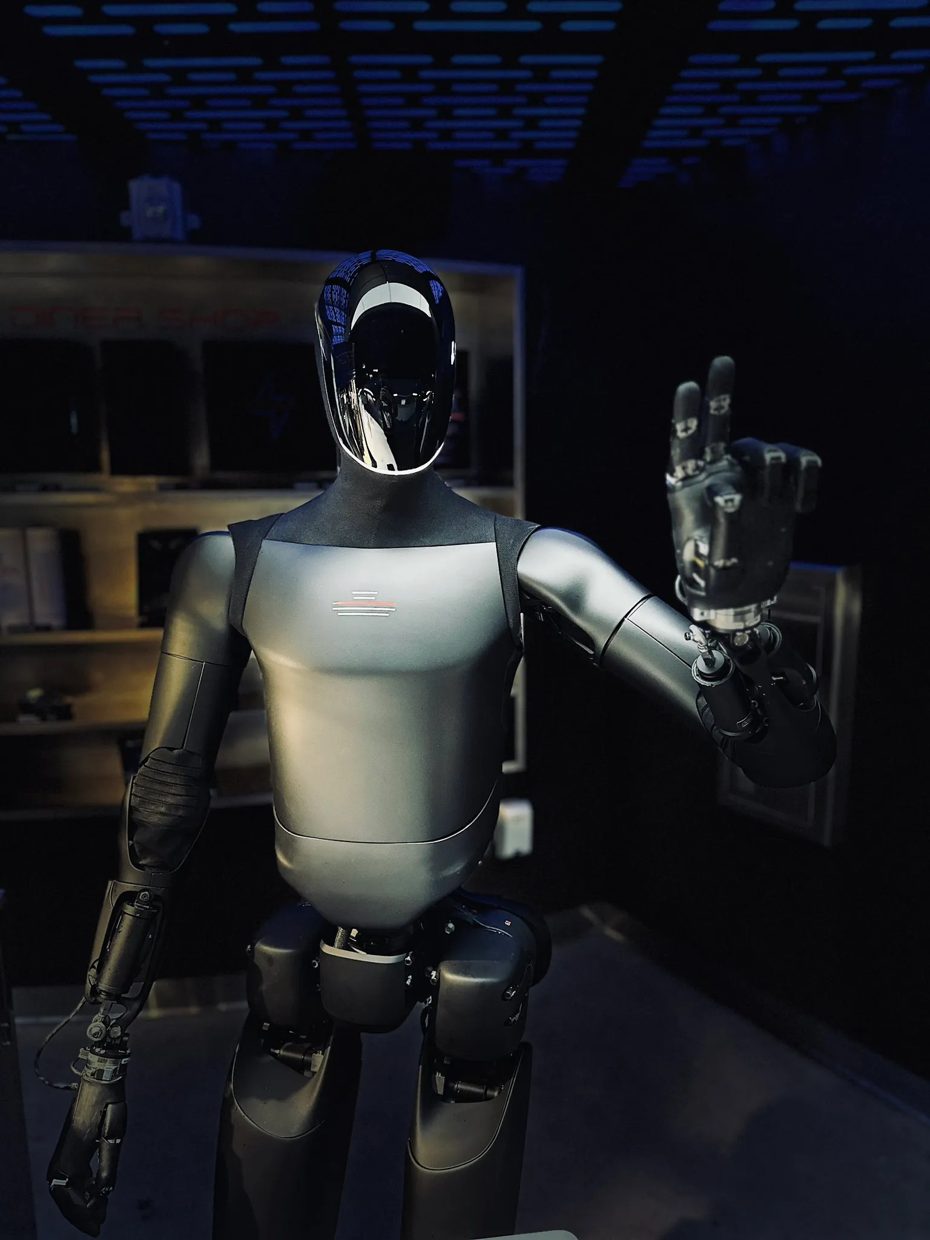
Intelligence in a body. Optimus, the humanoid robot, in development and behind its own schedule. The same anatomy as the car: vision networks to see, a language model to interact, and a body to act. Not alone; Figure, Unitree and Boston Dynamics are in the same race. I show it and I do not promise it. Era two gave the machine eyes. Era three gave it language. This is what it looks like when it gets hands. Asimov’s robot, without the three sentences.
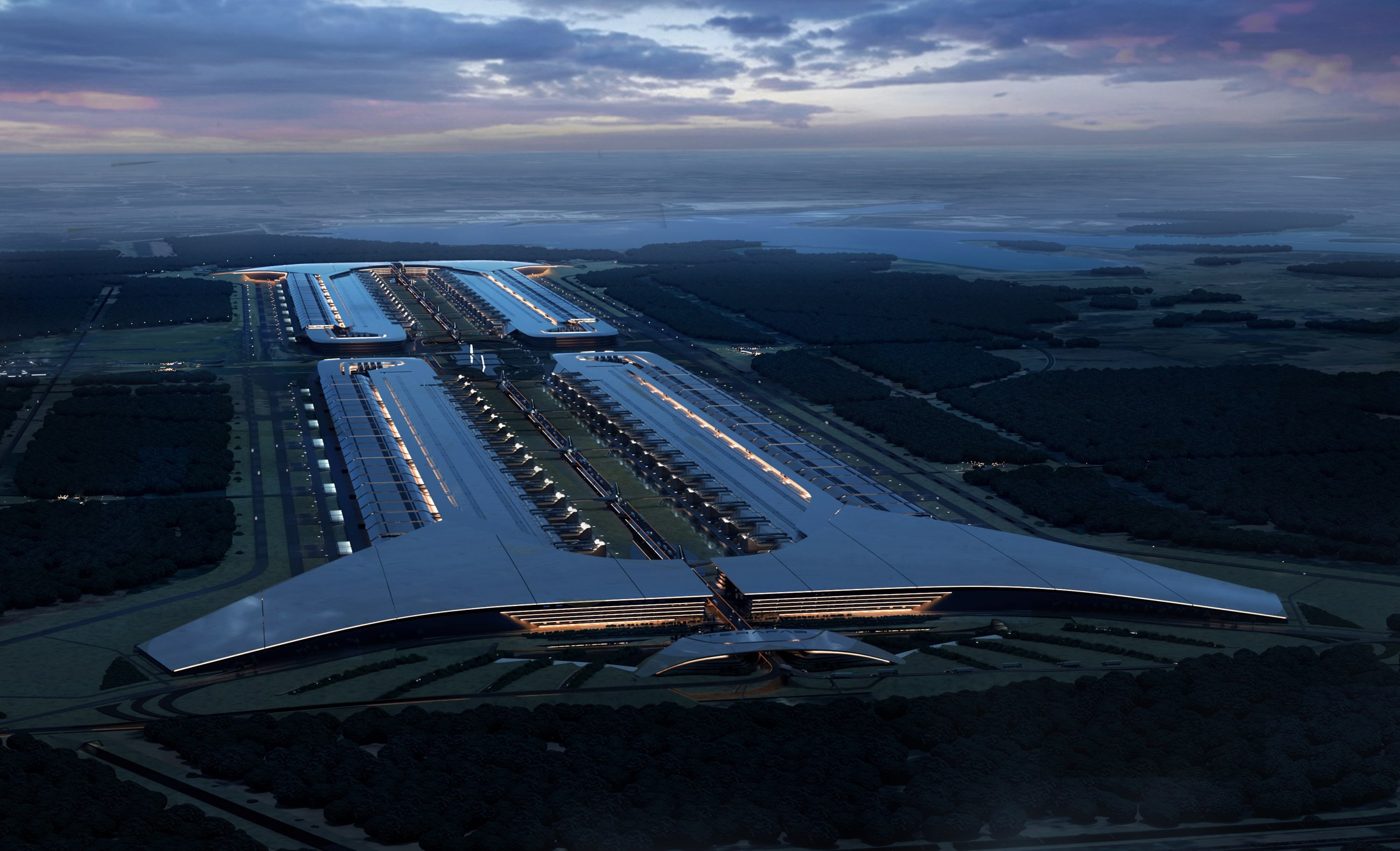
The largest building on Earth. In Grimes County, Texas, Tesla and SpaceX plan to build a chip factory they call Terafab. Sixteen point eight billion dollars committed; filings that allow for up to a hundred and nineteen billion; more than a hundred million square feet planned; Intel as the manufacturing partner. The chips are for the robots, for the cars, and for data centres in orbit. Musk says it will be “the largest and most valuable building on Earth by far.” Meanwhile TSMC builds in Arizona, Samsung in Texas, and Europe has a Chips Act: the whole industry is trying to depend less on one island. Hergé’s rocket needed an engine. This is the engine.
Intelligence needed a body, a vehicle, and a factory for its brains. Era three is not software any more. It is physical. For anyone who insures bodies, vehicles and buildings, I will leave that sentence where it is.
The constraint moved
In 1956 the constraint was ideas. In 1986, data. In 2012, compute. In 2026 it is chips and energy, and the politics of where they are made.
If you ask the man building Terafab where the need for compute ends, he will talk about capturing a share of the Sun’s energy. I will settle for the office letting my assistant read my files.
Who holds the pieces
A map of the stack, as of October 2026, one row per layer. It moves monthly.
The models: in the United States, OpenAI, Anthropic, Google DeepMind, Meta, and SpaceX, which absorbed xAI. In China, DeepSeek, Moonshot, Alibaba. In Europe, Mistral.
The chip design: Nvidia, AMD, Google’s own TPUs, and the in-house designs that Terafab exists to manufacture.
The fabs: TSMC in Taiwan, which makes most of the world’s advanced chips; Samsung; Intel, now Terafab’s manufacturing partner.
The machines that make the fabs: ASML, in Veldhoven in the Netherlands, today the only company on Earth building the lithography machines the top chips need. Its light comes from vaporising droplets of tin. Terafab has signalled that it wants to make that light with a free-electron laser instead. It is a signal, not a plan.
The servers, the data centres, the energy: Dell, Supermicro, the hyperscalers, the grid. And SpaceX, for where it wants the data centres to go next.
Two choke points explain the whole geopolitics of this industry: one island, and one Dutch company. One man is now aiming at both. Europe’s two seats at the table are ASML and Mistral, and I say it because it is our continent.
Monday morning
Hand an agent a workflow and it will build every variant of that workflow you ever had. Faster than any consultant. And it will never once ask whether you need them.
It is the clay man with the word on its forehead. It is the broom. It is three sentences into forty stories. It is two orders in the dark between Earth and Jupiter. What it was given, it did. It is now available by subscription.
The machine is right. The hard part is the three sentences you did not write.
Next: Part 7: The Assistant Who Knows You
The series
- Part 1: The Dreamers Wrote the Spec
- Part 2: The Obedient Machine
- Part 3: The Rule-Writers
- Part 4: A Machine with Millions of Dials
- Part 5: What a Language Model Is
- Part 6: The Apprentice’s Problem
- Part 7: The Assistant Who Knows You